Translate

Monday, February 22, 2021

Producing Radio Shows from Home

 Preparing to Record from Home:

We have all had to make a lot of adjustments in our life due to the pandemic.  One of the biggest changes I had to adapt to is where I produce my radio shows.  For more than ten years, I broadcast live out of the WTIP studios at 1712 West Highway 61 in Grand Marais.  Over time, I have produced several pre-recorded shows, but that was also out of the WTIP studios.

In the last few months, many of the hosts have adapted to working out of home.  We bought our own equipment, learned how to work with recording programs such as Garage Band, and shared the knowledge with our fellow hosts.

Since I am in the Apple Verse, I had to learn Garage Band.  I was given hints by many of the other hosts.  One of the most helpful hints was the links to certain YouTube videos that taught me the basics of recording and editing.  A few months after starting to record the shows, Garage Band went through a major upgrade, and I had to learn a lot of it again.

One of my biggest challenges was digitizing my CD collection.  It is a lot faster to do a show when you can just drag the song into the project, instead of having to pull songs off CDs every time.  I've accumulated a lot of CDs over the years, and the process of putting them into Apple Music one by one took several weeks.  When I'm doing mix shows, I still have to upload CDs from time to time.

Preparing for the Show:

The first step is to sign up for the show.  It is done on a web site called SignUpGenius.  I sign in, and can look at any of the shows that I host for WTIP.  When I see an open show I would like to host, I put down any notes about the show and click on the button to sign up.  For instance, I put down "Celtic Music" when I signed up for the Musical Chairs show which broadcast earlier this month.

Some hosts use a stage name, but I prefer to use my own name.  My shows aren't controversial, so I am not worried about listeners knowing who I am.  I find it can be a great ice breaker when I meet a new person, and they tell me my voice sounds familiar.

Jana sends me my underwriters more than a week before the show is set to air.  I print them out, and review them before recording.  Any new underwriters I read out loud before recording them.  I plan which underwriters are going to be read at the top of the hour, 20 minutes into the hour, and 40 minutes into the hour before I start the show.

As far as the music, I write down some sets before the show (especially if is significant to that day).  I know where the show needs to go, but I do not have every second of the show planned.  For me, hosting a show is a bit like writing.  It is fun to enjoy the creative journey.


Recording the Show:

It is important to have a meaningful first song and set.  When I record Thirsty Boots and Classic Country, I use theme songs (A Calling On Song, and You're Looking at Country respectively).  On my other shows, I usually record the initial announcements followed by the first set.  Both approaches can be used effectively.

As when writing a paper, transitions are important.  That includes transitions from one show to another, and transitions from one set to another.  Everything has to flow smoothly.

My first full set of Classic Country is always a Country dance set to transition from my Polka Time show.  The final set of Classic Country is always a Country Gospel set used to transition into the Sounds of the Spirit show which follows me.

Picking out the music is only part of the show.  Announcements have to be well executed too.

Between sets, I back announce the songs that have just played.  If it is time to read the underwriters, I read them next, and follow with announcing the first songs or artist of the next set.  In a live set, it is a bit risky to forward announce songs, because sometimes the wrong song will play on a CD.  However, this is not an issue when you are recording in advance.

One thing that is important during a radio show is to give information about the artists and songs.  This can be found in books, or on reliable online sources.  The information you give is often the difference between people listening to the radio, or a music streaming service.

Music selection can be a challenge.  When I do Polka Time, Classic Country, Thirsty Boots, or Women in Music, I need to stay within a genre.  The Monday Night Mix, Saturday Night Mix, and Musical Chairs shows only require that I do not play anything offensive and/or with bad words.

If it is a new song, I listen to the entire song before it is included in the show to make sure it stays within F.C.C. guidelines.  There are also the options of looking for the lyrics in the CD cover, or looking for the lyrics online.  Musicians, you are more likely to have your music included in a radio show if you list both the length of song and the lyrics.

Picking out all the music for a long radio show is a bit like flying to the Moon.  The first part of the journey is uphill (gravity of Earth), and the second part of the journey is downhill (gravity of the Moon).  At the beginning of the show, I often times feel like I'm having to work harder to put together the sets of music.  By the end of the show, I usually feel like I have so many sets that I could go another couple of hours.

One big difference between live and prerecorded programming is the ability to edit.  If I don't like the way my announcements sounded, I go back and edit them.  It is relatively easy to cut out a section if dialog, and replace it with something better.  The trickiest part is making sure the old and new dialogs match with volume and flow.  I might record same dialog up to three times before I am satisfied.

I also edit songs to a small extent.  Sometimes a song does not match a set as well as I had hoped, and it needs to be eliminated.  More often, there is a bit of dead air at the beginning or end of the song which needs to be edited out.

The editing takes more time, but has helped me to be a better radio host.  I am less likely to make an error again that I have already had to edit in a previous show.

When I complete each hour of a show, I share it over email with Sterling at the radio station.  He puts it in the system, and is generally the one to do the weather and announcements at the top of each hour.  When I record the show, I make each "hour" of the show about 59 minutes, so Sterling has time to do the announcements before the next hour or show.

Sterling sends me a message when he receives the show, and then puts it on the air.

The Broadcast

When I am broadcasting live out of the WTIP studios, I can hear myself and the songs over my headphones.  It is not the same as listening from the other side of the radio.

Since I am recording from home, I am able to listen to my shows.  Most often, I am sitting at home, sometimes I'm in the car, and sometimes I hear my shows going out over the speakers at local businesses. Last month, I was in Subway, and heard my show on the speakers.  I was happy to hear that the locals were listening to WTIP, and that I was contributing to their enjoyment.

When I'm recording the show, I don't always listen to the whole song if I have heard it before.  It takes on average about an hour and a half to record one hour of programming, and would take much longer if I listened to every song.  When I listen to it from the other side of the radio, I get to hear every song in its entirety.

Listening to my shows, I also have the chance to critique my performance, and learn things that make my future shows better.  Even before the pandemic, the station would give us recordings of our shows from time to time, and have us use those recordings to critique ourselves.

I miss the energy of a live broadcast.  There is more pressure on a live program since the mic is live and you can't have dead air.  I work well under pressure, and feel like that extra energy can come out over the airwaves.

Another thing that is enjoyable about live broadcasts is to get phone calls from the listeners.  It is fun to talk to them when I am broadcasting, and can be a nice challenge to find their requests.  The station does pass on any emails, and listeners can still communicate with us in that way.

On the other hand, I don't have two or more hours of driving to do a show when recording from home (which I am grateful for in bad weather).  It is also nice to be able to listen to my shows from the other side of the radio.

Sunday, October 4, 2020

Black Bears in Cook County!

 There have been an exceptional number of bear encounters in Cook County, Minnesota this year.  I have had two confirmed close encounters with them in the last month.

The first encounter was at my place on Gunflint Lake.  I was baking chocolate coconut bars with my friend, socially distanced 300 miles away.  We had shared these bars before, so I sent her the recipe, we each purchased our own materials (graham crackers, sweetened condensed milk, coconut, and chocolate chips) and made the dessert together over FaceTime.

When the bars were about done, I heard a scratching noise out on my porch.  I opened my inner door to investigate, and found myself just inches from a yearling black bear.  So my friend could enjoy the moment too, I turned my iPad around to show her, before rapping hard on the flimsy glass door between the bear and me, and yelling "go away."  It turned around and walked off into the woods.  Black bears are governed my fear and then food, so it is usually pretty easy to scare them away.

A few nights ago, one of my co-workers saw a large bear near my place.  Last night, I heard a loud "huff" outside my window, but by the time I turned on the light, it was gone.

On the 29th of September, WTIP North Shore Community Radio put out an interesting story called Bear Issues Continue in Grand Marais and North Shore in Fall 2020.  When I was in Grand Marais today, I saw a large black bear eating apples near the Cook County Higher Education building.  I stopped and got some pictures.  My camera has a good zoom lens, so I am was not as close to the bear as it may seem.


This bear wasn't getting into mischief, he or she was just getting ready for the winter.  Their normal food supply of berries was a total bust this year; I don't remember the last time we had such a lousy crop.  Due to their lack of food, and the rapidly approaching hibernation season, they are getting bolder.  

If you live in bear country, make sure to secure garbage and food (including sunflower seeds) so bears cannot access those things.  I have heard many experts emphatically say that there is no such things as a problem bear, only problem people.  The bears destructive behaviors are learned from the careless action of people.  These behaviors are bad for people, and worse for bears.  For their own good, please be careful not to attract them.  They are more fun to see in their natural habitat.

I recommend closing your ground floor windows in unoccupied rooms at night.  If they smell food, a screen is not going to stop them from coming in and helping themselves.  For the same reason, it is best to avoid putting food on a screen porch.

I often get asked what to do when you encounter a black bear.  Here are my suggestions of things to do and not to do when encountering a black bear:

  • Bears are governed by fear and then food.  Stand your ground and act big.  Jump up and down, clap your hands, and yell.  They will generally be scared enough to go away.
  • Slowly back away.  Do not run from them! Black bears can run at 30 miles per hour, and they have an instinct to pounce on something that is running away.
  • Do not try to escape by climbing a tree.  They are the most incredible climbers imaginable, and can easily pass you on the way up.
  • The Forest Service recommends throwing something at them.  I find that if something lands right next to them, they generally quickly run away.
  • Some people say to bang pots and pans together, but I find that just wrecks your dishes, and only works temporarily on the bear.  Personally, I avoid that tactic.
  • Some people use bear spray, but you to be very careful with that stuff.  I know two people who had the bear spray come back at them, and had to have a very long eye rinse to stop the stinging.  Unless you are dealing with another larger species of bear (such as a grizzly bear), I would avoid this approach.

One last bear tidbit.  In the stock market, you hear of bear and bull markets.  A bear's claws go down, as does a bear market.  The bull's horns go up, as does a bull market.

Monday, July 20, 2020

Hiking in the Cascade River State Park

Ellie and I spent much of the day today hiking in the Cascade River State Park.  We hiked in along the River Trail, taking in the various waterfalls.  Eventually, we turned away from the river, and hiked up Lookout Mountain on one trail, and back on a trail less traveled.  Here are some pictures from this fun day!
Ellie at the Mouth of the Cascade River

Cascade River Flowing under Highway 61 into Lake Superior

Ellie Cooling Down in the Cascade River

Hiking Trail

Cascade Falls

Ellie Enjoying One of the Numerous Waterfalls

We hiked on the highlighted trail.

Lookout Mountain Overlook

Superior Hiking Trail

Ellie on Lookout Mountain

Bunchberry

96 Steps to the River

Cascade River Well Above Most of the Waterfalls

Thimbleberries

Saturday, June 27, 2020

Hike to the Green Harbor Light in Grand Marais


Last Monday, Ellie and I climbed and hiked our way out to the green harbor light in Grand Marais.  It sits across the bay entrance from the much more well known Grand Marais Lighthouse.  In the picture above, you can see the main lighthouse on the left side of the picture, and the green light on the right.
This light is a lot harder to get to than the main light.  We scaled two sections with large boulders, trekked over some beautiful rock formations, and hiked along a weathered cement breakwater.  This one gets overtaken with waves much easier than the north wall.

In case you are wondering why Ellie is so wet in these pictures, she decided to take a short jump off one side the breakwater and into Lake Superior!
I took the above picture of the green light the previous week.  It is a bit of an optical illusion.  The goose is actually a long distance from the light.
One of the most interesting formations was the rock bridge below.  It was shoulder width or smaller.
Ellie is not always the best at returning when called, but I felt safe letting her off the leash after I had to help her over the first boulder field (below).  She had a great time running up and down the breakwater!

These two pictures are of Ellie when she decided she did not want to join me in the boulder field.  A few minutes later, she let me leash her, and I carried her back through the boulder field  to shore.
The final picture is looking back at the breakwater we traversed from shore.  It was good exercise to get there.  I recommend it if you are in shape.  If not, take the path out to the main Grand Marais Lighthouse instead.


Friday, June 19, 2020

Wildflower Hike on the Magnetic Rock Trail

My boxer Ellie and I hiked to Magnetic Rock last Sunday.  Due to the relatively frequent fires, and the open rocky surfaces, the Magnetic Rock Trail has some of the earliest and best wildflowers on the Gunflint Trail!

Bunchberry

The bunchberry actually has a lot of tiny flowers surrounded by white sepals to better attract insects for pollination.  Each flower can produce an edible berry.

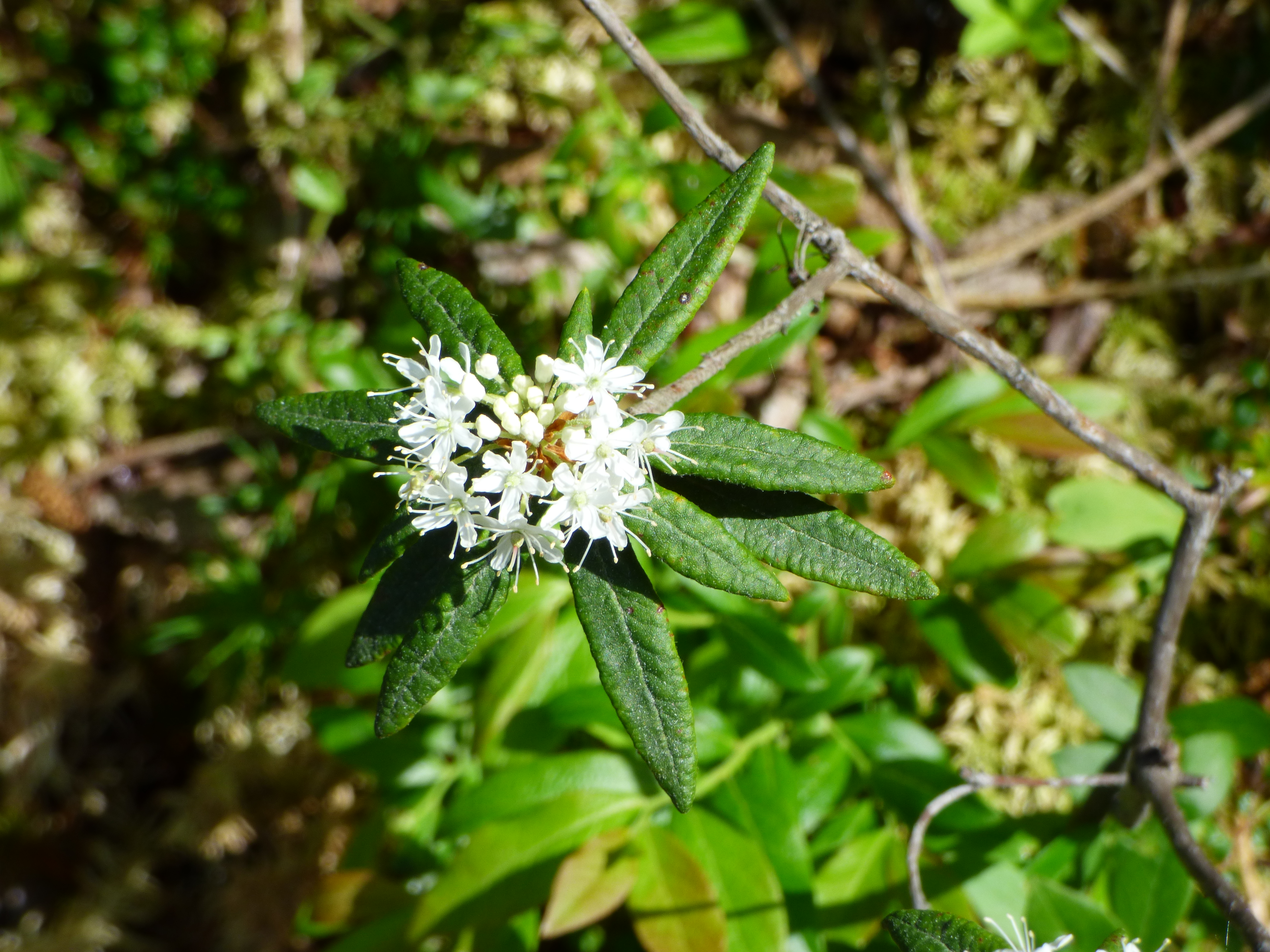
Labrador Tea

Pink Lady's Slipper (Moccasin Flower)

The pink lady's slipper takes approximately 5 years to go from seed to flower.  Orchid seeds do not have a source of food, so they have to wait for a certain type of fungus to grow on the seed.  The fungus gets its nutrients from decomposition, and the orchid seed receives nutrients from the fungus.  Our Minnesota State Flower (showy lady's slipper) takes 15 years to go through the same process.  Never handle or pick a lady's slipper!

Wild Rose

Jack pines are one of the many fire dependent species along this trail.  Most of the Jack pine cones do not open until 105 - 200 degrees Fahrenheit and they can handle over 1,000 degrees Fahrenheit for a few seconds.  In order to get a pure, natural stand of Jack pine, you need a fire.

Jack Pine

Hairy Honeysuckle

Twinflower

Magnetic Rock Trail

Magnetic Rock is 23 - 30 feet tall.  A lot of the old brochures had it as 60 feet tall, but the people who wrote that literature probably never saw the rock.

Magnetic Rock is in the Gunflint Iron Formation.  It is composed of slate banded with magnetite.  Your compass will spin if you walk with it along the face of this rock.  Magnets will stick to it as well.

The first year I was on the Gunflint Trail, Magnetic Rock was visible from about a quarter mile away.  Now it stays hidden until you are right next to it.

Magnetic Rock

Ellie at Magnetic Rock

I saw some other neat wildlife along the Magnetic Rock Trail.  The garter (not gardener) snake below was sunning itself on an exposed rock near Magnetic Rock.

Garter Snake

Garter Snake

Red-Osier Dogwood

Columbine

The rock fern was up pretty high.  Luckily, I brought my camera with a 60x zoom!

Rock Fern on Magnetic Rock

Pine Knot

Pine Knot

On the way back, I saw some flowers that I missed on the way out.  It pays to look at the other side of the trees and rocks!

Wood Lily (With a Special Visitor)

Wood Lily

Upright Bindweed

Wetland View from the Magnetic Rock Trail

It was a great day for a hike.  The temperatures were is the 60's and a cool breeze blew across the rocks.  I recommend this trail on a cooler day, as the exposed rocks give you a bit of an oven effect on a hot, sunny day.

Purple Pea