Translate

Friday, June 12, 2020

Wildflower Hike on the Kekekabic Trail

Pin Cherry
 
My dog Ellie and I took a nice hike a couple of weeks ago on the Kekekabic Trail from the Gunflint Trail to Mine Lake.  It was a warm afternoon, and Ellie jumped in the water many times to cool off.  The mosquitoes and black flies weren't bad until the end of the hike, but I did pick a few wood ticks off of both of us.

Wild Strawberry

 I was delighted to find so many new wildflowers along the trail, along with some other interesting wildlife.  Wildlife sightings included a pair of ring-necked ducks, a redbelly snake, spring azure and mourning cloak butterflies, and an American toad.

Speckled Alder

 The first flower of the year on the Gunflint Trail is generally the speckled alder.  Male catkins on this member of the birch family grow spikes.  Most people walk by this flower and don't know it's a flower.


Kekekabic Trail

American Toad

 Ellie is very good as spotting toads.  Luckily, she has never grabbed one.  She would be in for a huge surprise, as the toad defense mechanism is to put out the worst tasting chemical imaginable.

One time, I was leading a hike, and saw a toad hopping on the edge of the trail.  There was a big white dog along, and I told the dog's caretakers not to let the dog near the toad.  When the dog spotted the charismatic reptile, it lunged and grabbed the toad.  The dog staggered back with foam pouring out of its' mouth and a very surprised look on its' face.  Undamaged, the toad hopped away.

Wild Strawberry
 
The wild strawberries were flowering during my hike, and will bear fruit in June.  Wild strawberries are a little smaller than blueberries you might find in the store.  They have a lot more flavor than the genetically modified varieties.  I've found that the flavor of a strawberry is inversely proportional to the size.

Kekekabic Trail at (and in) Mine Lake

The Kekekabic Trail was flooded in multiple areas, which is normal.  The line of water off of Mine Lake is actually the hiking trail.  If you decide to hike this trail for any distance, be prepared to get a little wet.

Mourning Cloak Butterfly

Pink Lady's Slipper
 
The pink lady's slipper is often mistaken for our Minnesota State Flower.  Our actual state flower is the showy lady's slipper, which is a much rarer species.  Pink lady's slippers take about five years to go from seed to flower, and the showy lady's slipper takes approximately fifteen years to do the same thing.  In orchids, seeds do not contain a source of food like most other seeds, so they have to wait for a certain type of fungus to start growing on which they feed.  Please do not pick these amazing flowers if you find them in the wild!

The Kekekabic Trail was originally built to allow firefighters access to the wilderness.  It was well placed, since most of the major wildfires in the last two decades have crossed this path.  The wildfires make for a much greater biodiversity, as the Gunflint Trail is in a fire-dependent ecosystem.  I highly recommend this beautiful hiking trail if you are on the Upper Gunflint Trail.  It can also be accessed from Ely, Minnesota.

Monday, May 25, 2020

Happy Memorial Day

This Memorial Day finds us at a challenging time in the history of the world.  Memorial Day was designed to give us a day to honor those who made the ultimate sacrifice so we may be free.  In honor of those who gave their lives, and are giving their lives for us, I am posting a variety of pictures of Military aircraft from World War II to the present.

Most of these pictures were taken at the Duluth Air Show a couple of summers ago. The Duluth Air Show is cancelled this year, but I look forward to attending it as soon as we are able have large events again.
B-25 Mitchell
The B-25 Mitchells were used on the famous Doolittle Raid during World War II.  These bombers were taken off the deck of the U.S.S. Hornet, and conducted the first Allied bombing raid on Japan.  It was a huge moral booster for the United States, giving hope that Japan could be defeated.
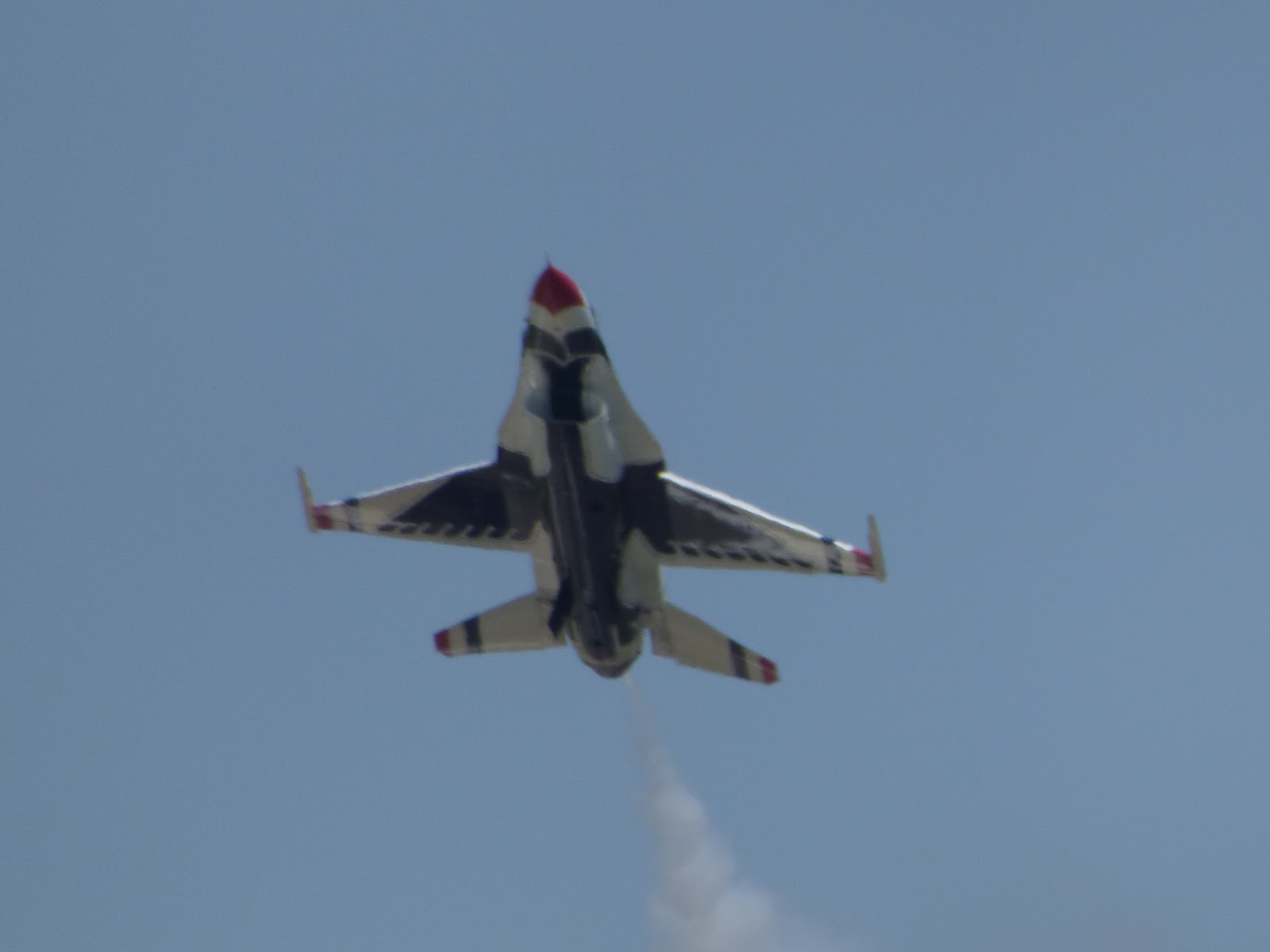
U.S. Air Force Thunderbirds (F-16 Falcon)
U.S.A.F. Thunderbirds

U.S.A.F. Thunderbirds
 The United States Air Force Thunderbirds and the United States Navy Blue Angels recently did inspirational flights over several cities in honor of the medical professionals on the front lines of the COVID-19 pandemic.  In Minnesota, the C-130's from the Twin Cities, and the F-16's from Duluth flew over hospitals throughout the state as well.  It was a great tribute to all the first responders who are putting their lives on the line so we may survive.
C-130 Hercules
P-51 Mustang
World War II T-6 Texans and T-34 Mentor Aircraft
I saw the four T-6 and one T-34 aircraft fly over the Twin Cities on the 75th anniversary of VE Day (May 8, 1945).  It was an unexpected and inspirational sight!

Thank you to all those have served and are serving this country!  

You are an inspiration to all of us!


Sunday, May 17, 2020

Wildlife During a Pandemic

I spent the last couple of months in southern Minnesota with my family, and have just returned to my place on the Gunflint Trail to begin working again.  While in southern Minnesota, I took a lot of walks to the local parks with my family.  There was a lot of interesting wildlife that I was able to photograph in that time.  It was still possible to see  nature while observing the governor's stay-at-home order in the city.  Here are some of favorite photos:

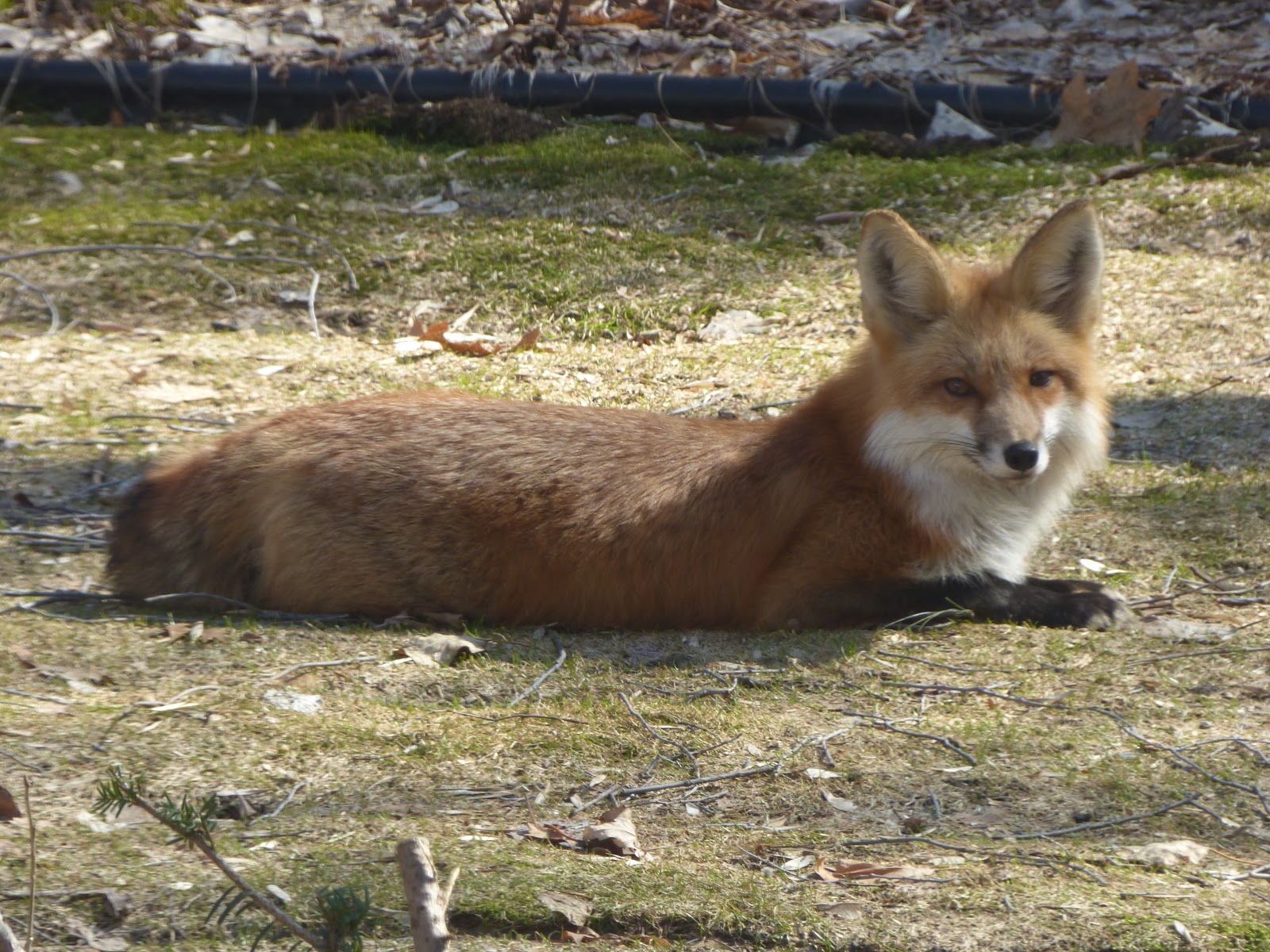
Red Fox

Canada Goose

Painted Turtles
 I sent one of the turtle pictures to WTIP, North Shore Community Radio.  It made it into their newsletter, and on their Facebook page.  During this pandemic, the station has been closed to volunteers, and part of their dedicated staff have been working from home to keep everyone safe.  Two of my recorded shows made it onto the air a few weeks ago, but I have not done any new shows  since the beginning of March.  I look forward to the day when we can all conduct live shows again.

Wood Duck

Wood Ducks
Eastern Phoebe

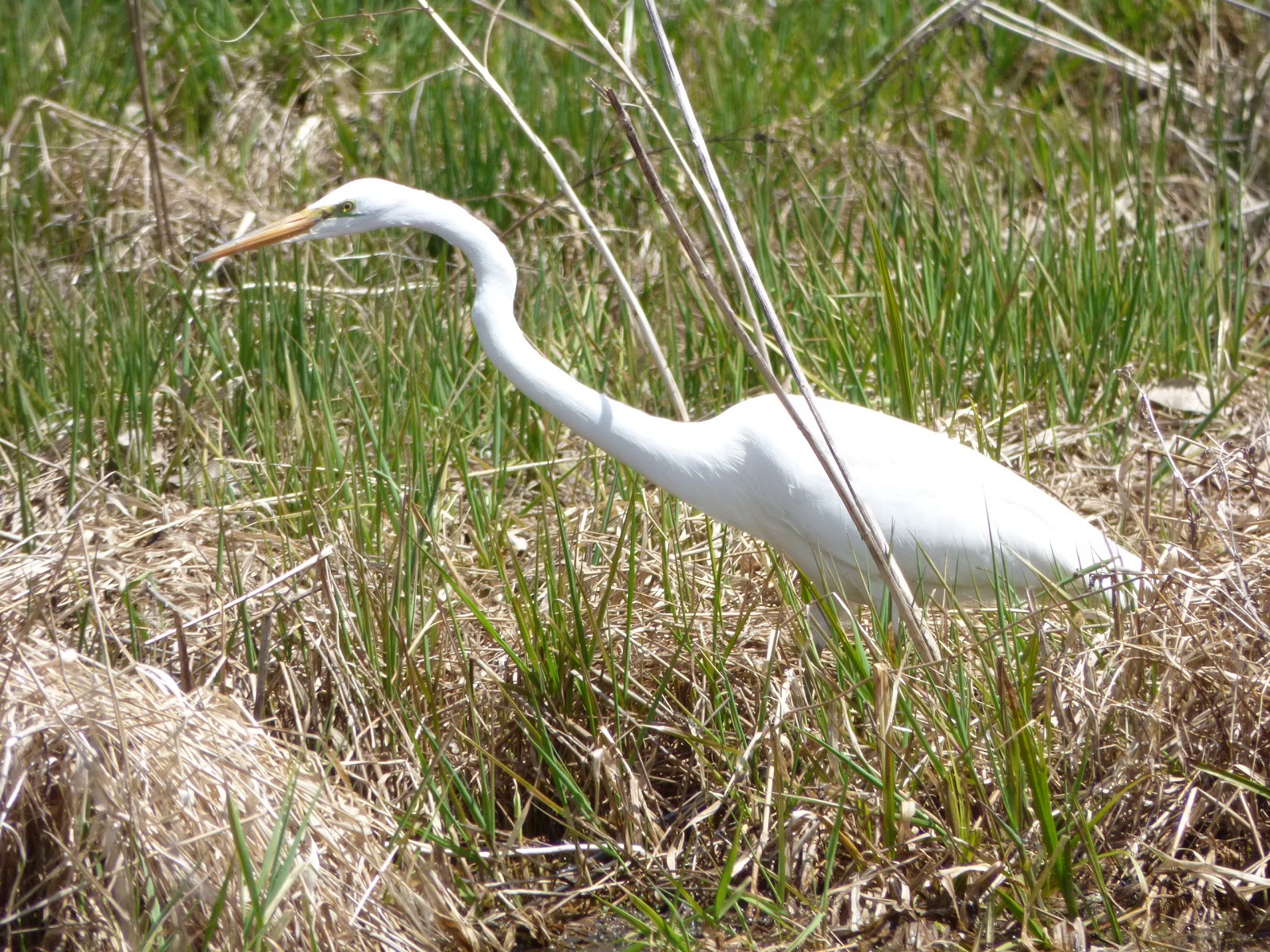
Great Egret
Osprey over a Ball Field
 The ball field where I saw the Ospreys has stadium lights.  One osprey was on one light.  The mate was on the second light, and the nest was on a third light.

Osprey Nest
Great Blue Heron
It took many tries to get this picture of the great blue heron.  I saw it over the course of several walks around Lake Bennett, but it always seemed to be flying away before I could raise my camera.    It felt great to finally capture it on disk.

Mallard on a Nest

Red-winged Blackbird

Mallard Ducks
These ducklings were the first baby birds I observed this year.  They were in a pond in Howard Johnson Park.

Mallard Ducklings

Wood Duck
Canada Goose on a Nest
 If the weather was fair, I almost always brought along a camera on my daily walks through the local parks.  Wildlife photography is a matter persistence, patience, and a bit of luck.  These pictures were taken over the course of two months.

Cottontail Rabbit

Wild Turkey Hen
  I consider myself very fortunate that I was able to spend the two months off with my family.  When the initial closing of my employer's business followed by the governor's stay-at-home order went into effect, I was already visiting my family.  I had two options, spend the time with my wonderful family, or spend an indefinite amount of time in sheer solitude in my apartment on the Gunflint Trail. Of course I stayed with my family.  We had a very nice time with each other, and I wouldn't trade that family time for anything.

Downy Woodpecker

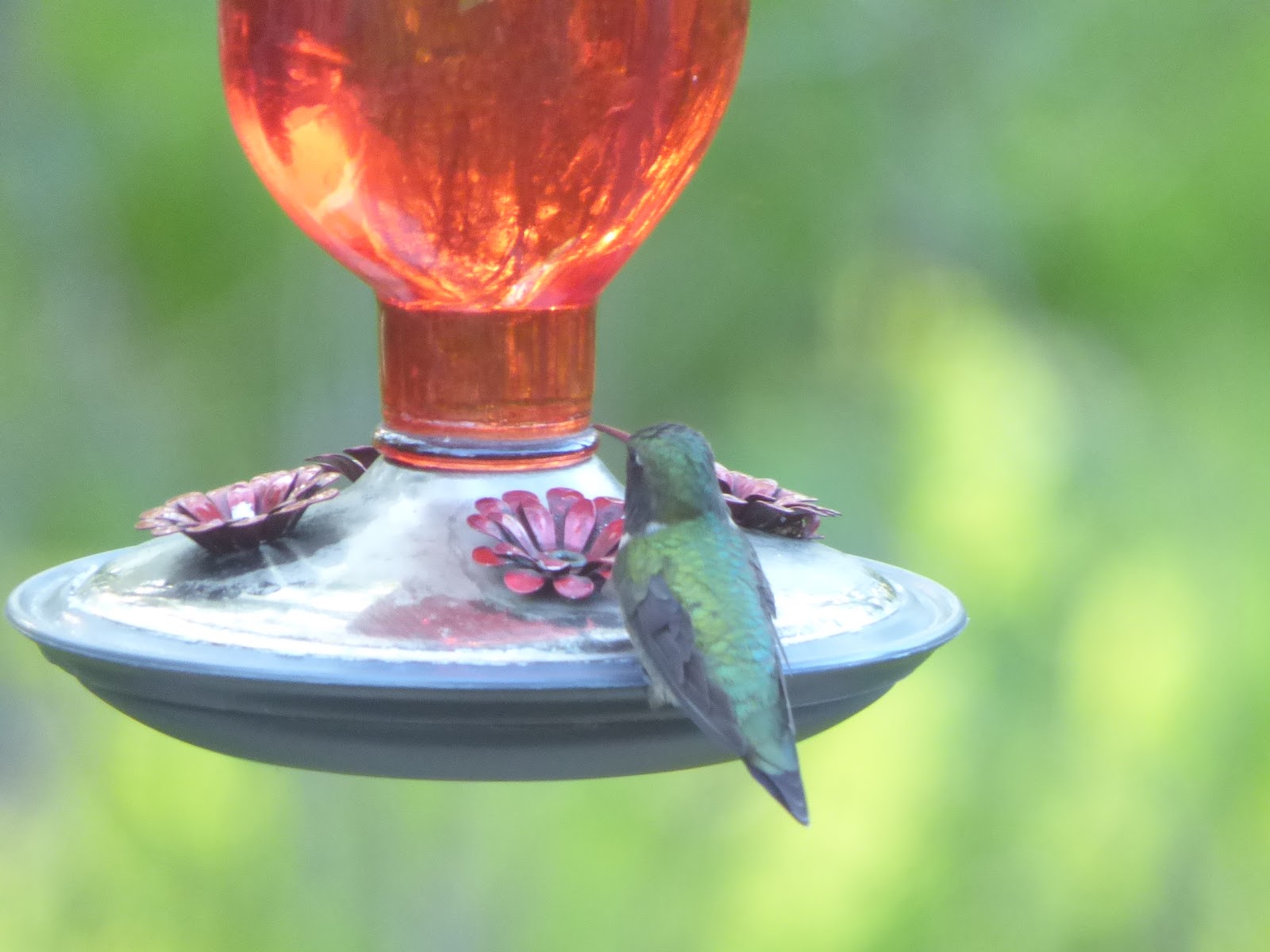
Ruby-throated Hummingbird
My days were spent doing projects around the house, cooking and baking, working on my blogs, doing weekly shopping trips for groceries, and taking long walks.

Wild Turkey Tom
Initially, we spent a lot of time watching the news and all the briefings.  As time went on, we watched less of the news.  To get a break from all the bad news, we watched a wide variety of movies after dinner, along with a fair amount of comedies from the British Isles.

Wild Turkey Tom in Full Display
To read more of my blog articles, go to my other blog at https://sillimanbirding.blogspot.com.  I started a new feature called Bird of the Day, in which I posted a lot of short articles about specific birds, most of which I observed in the last two months.

On this blog, I started to post book, audiobook, and film recommendations.  I plan to continue these new features on each of my blogs.

Tuesday, May 5, 2020

Audiobook Recommendation - American Wolf

American Wolf by Nate Blakeslee is a riveting book about the reintroduction of wolves into Yellowstone National Park.  It can be found in both book and audiobook formats.  The audiobook is read by Mark Bramhall, who does a nice job.

One of the great learning exercises I had in college was in my Environmental Policy course.  Every student was assigned a different viewpoint to defend.  It didn't matter what our actual views were.  The project helped us to see that there are often valid points to more than one side in an issue.  To this day, I still form an opinion on the issues, but I also try to see things from the other side.

This book outlines the long-running debate about reintroducing wolves to Yellowstone National Park.  On the pro-wolf side, you have the people who want to have a balanced ecosystem in our oldest national park.  They are the ones who have also opened up wolf sightseeing tours, and have a significant social media presence getting people to appreciate these often misunderstood animals.

The anti-wolf side are the ranchers and hunters.  Elk populations were huge since wolves were eliminated from the park many decades ago.  The economy of whole towns near Yellowstone are based in large part on elk hunting outfitters.  There were so many elk in the area, that they could pretty safely guarantee a successful hunt.

Ranchers were worried about their livestock.  Statistically, not a lot of domesticated animals get taken down, but one ranch could still lose a lot of animals if the wolf pack zeroes in on that spot.

The book focuses on one of the packs, and an alpha female designed "O6."  She led her pack for many years through many challenges, and still managed to remain in the alpha (top) position.  She was possibly the most popular wolf ever on social media.

[Spoiler Alert] When the wolf was shot by a hunter, people were sad and angry.  She was wearing a collar, but her fur was so thick that the hunter claimed he could not see it.  After she passed away, the hunter was astonished to see the pack emerge from the forest, stand vigil at her side, and howl mournfully.  He backed away, and came back for the body later.  The hunter was interviewed by the author of the book, but his name was changed for his safety.

Ecologically, where was a major ripple effect caused by the reintroduction of one pack of wolves, and a wild pack wandering in at about the same time.  The elk population did go down, which allowed more vegetation to start growing along the shores of the rivers and streams.  Water clarity increased.  Beavers (who had also been eliminated from the park) returned when they saw their favorite food (aspen) growing.  They constructed dams and created ponds.  Many types of life benefit from a beaver pond.

Wolves eat coyotes.  When the coyote population dropped, the rodent population increased.  The increased rodents are a great source of food for raptors, whose populations also increased.  Now there are many beautiful predatory birds in Yellowstone National Park that were not there in as great of numbers before the reintroduction.

In this day and age, it is rare to find someone reporting both sides.  Nate Blakeslee does this well in the book.  He is obviously pro-wolf, but he gives voice to the other side.

I highly recommend this book to young adults and adults.  It is a great way to learn about the benefits of wolves in Yellowstone National Park.  I see the same basic debate happening in Northern Minnesota, and am sure it is happening in many other areas as well.  Some of the content may be a bit troubling for kids, but it is a reality they should learn when they approach adulthood.


Saturday, May 2, 2020

Audiobook Review - The Ravenmaster


A great audiobook I listened to in recent years is called The Ravenmaster, written and read by Christopher Skaife.  The author is a Yeoman in the British Army who is in charge of taking care of the ravens in the Tower of London.  Prior to listening to this audiobook, I had no urge to visit the Tower of London, but now it is on my bucket list.

The author freely admits that he is not a scientist, and does not attempt to push the book as a scientific work.  He has had many interesting adventures with these birds, which make it into the book along with some very interesting history and mythology surrounding the Tower of London.

The reason the ravens are kept at the tower is based on a legend that there needs to be a certain number of ravens at the Tower of London, or the monarchy will fall.  He delves deeply into this legend, and comes to the conclusion that no one really knows where the legend started.  In going into the legend, he also goes over a lot of interesting history.

Some of my favorite passages in the book have to do with the mischief in which these birds engage.  For instance, one of ravens is good at getting sandwiches from the tourists.  It lands next to them when they are eating on the picnic bench.  Most people are so surprised at the sight of this large bird, that they drop their sandwich, which the raven grabs and flies away.

Another raven is good at flying in silently, and grabbing bags of crisps (chips in North America).  Before the person knows what is happening, the raven grabs the crisps with one foot, rips open the bag with its beak, fills its beak with crisps, and flies away.

Another interesting aspect of the ravens is the pecking order.  Ravens are highly intelligent birds, and they have a very definite pecking order within their flock.  At night, the ravens are put in enclosures, and they insist on being put in the enclosures in a certain order.  One time, the author and his wife had  dinner reservations to celebrate his birthday.  He thought that he could put the ravens in the enclosures in a different order just for that night; he was wrong.  The raven that thought it should be in first saw what was happening, and would not allow him/herself to be caught.  They never did make it to dinner that night.

The ravens at the Tower of London have their wings trimmed, but they are no longer rendered flightless after an accident several years ago.  One raven walking around near the top of the tower tried to leap from one perch to another, and did not survive the jump.  After that, they decided to lightly trim the feathers to discourage long distance flight.  If a raven is determined enough, it can fly away.  The staff then has to go try to retrieve the raven.  Since ravens are highly unusual in London, people often call the tower if one is seen.  However, some never return.

It was nice to listen to the author reading his own book.  Christopher Skaife is originally from the Dover area of England, and has a fun accent.

I highly recommend this audiobook.  It covers many interesting aspects of life with the ravens at the Tower of London.


Tuesday, April 21, 2020

Book and Film Reviews - The Big Year

One of my favorite book/film combinations is called The Big Year.  The book by Mark Obmascik is the true story of three birders who were competing to win the North American Big Year, a contest to see who can see the most birds in North America in one calendar year.  There are fewer than 700 breeding birds in North America, and each of these birders saw over 700 species.

You have to either have deep pockets, or be willing to go into a lot of debt to complete this contest.  A birder might be in Minnesota looking for a pine grosbeak, and hear of a unique type of hummingbird in Florida.  They drive to the nearest airport, hop on a plane, and go to Florida, and hope that they find their bird.  That combined with other travel expenses means someone can spend tens of hundreds of thousands of dollars to win.

An interesting part of the book is the history of the Big Year.  In one part of the history, the author wrote about one person decades ago who managed to do a Big Year for about 1000 dollars.  He hitchhiked around North America and still managed to see over 600 birds.

You can do a Big Year in less expensive ways.  Some people limit themselves to the Continental United States, their home state, a single county, or their back yard.  I did a couple of Big Years, and only birded in places I was already going.  To see my second Big Year list, go to my blog article on John Silliman's Birding Blog.

I saw the film The Big Year before I read the book.  It is starring Steve Martin, Owen Wilson, and Jack Black.  The strong supporting cast features the talents of Rashida Jones and Anjelica Huston.  As you can imagine with that cast, there is some good comedy thrown in.

The film is based loosely on the book, but definitely stands on its own two feet.  It really captures the obsessiveness of many of the serious birders.

Another way to learn about the determination of these birders is to do your own Big Year.  You can compete against yourself, or try to get some friends in on the action.  It is one of the best ways to learn about birding, and to get some great exercise (you often times have to walk a long way to see the birds).

I really enjoyed the film footage of the birds.  Especially interesting is the picture montage in the closing credits showing a picture of every bird seen by the winner.

Another highlight is Rashida Jones' bird call imitations.  She played one of the other birders (not competing for the Big Year) that often times showed up at birding events.  Rashida's character was also the love interest of Jack Black's character.

One of the top banjo players in the world today is Steve Martin.  He won a grammy for one of his albums, yet his music almost never appears in his films.  I was thrilled to hear his Pitkin County Turnaround in a scene in Texas where they are chasing a pink-footed goose (yes that's a real bird).

The book and film have been inspirations for many birders.  Every year, birders compete for the North American Big Year.  People are even starting to expand into a World-wide Big Year.  These works have inspired a huge amount of people to conserve birds, get outside, exercise, and go find some birds.  In an increasingly sedentary and indoor-oriented society, that contribution has been incredibly important.

I highly recommend both The Big Year book, and The Big Year film.  If you are already an avid birder, read the book first and then see the movie.  On the other hand, if you are not yet an experienced birder, I would see the film first.

Sunday, April 19, 2020

Book Review - Code Girls

One of the best audiobooks I have listened to in the last year is called Code Girls by Liza Mundy.  It is about a little known aspect of World War II history in which talented women were recruited as code breakers.

The woman that were recruited were talented at math and language skills.  They were found in colleges and universities, as well as through ads in the newspapers.

After a number of tests, the qualified women would be offered a war-time job and told to report on a specific date.  When they were hired, they were not immediately told what the job would entail, but they were told that they would never talk about it outside of the office.  Much of their work remained classified until recently, and some things are still classified.  Liza petitioned for some declassification, so should could write the book.

As the war went on, many of these amazing women joined the military as WACS or WAVES.  WACS were in the Army, and WAVES were in the Navy.

Earlier in the war, these code breakers broke one of the Japanese codes, and found out their plans for the Battle of Midway.  The Imperial Navy was going to try to pull part of the United States Navy to the Aleutian Islands by starting a smaller battle, and leave most of their forces to attack Midway.  The United States Navy learned of their plans, and left the vast majority of their forces at Midway, resulting in a huge victory from which the Japanese Navy never fully recovered.  Without the incredible work of the code breakers, the battle could have ended very differently.

The book also portrays women who constructed the code breaking machines which were used to crack the German Enigma code.  They were brought to a factory in Ohio, where they were trained to make specific parts of the machine.  Very few people were given the knowledge of what their machine did, but many figured out that it had something to do with code breaking since they had to make 26 of every part, and that is how many letters are in our alphabet.

The reason the work of these code breakers was so secretive is if the other side found out their code had been broken, they would totally change the code, and it would take months or even years to break the code again.  This happened after the battle of Midway when a reporter credited the code breakers with helping to turn the tide of battle.

When a code was broken, they had to take steps to make sure the other side didn't know.  For instance, they would send a spotter plane ahead of the bombers to make it look like a ship was found by such instead of a broken code.

Every great audiobook needs a great narrator, and Erin Bennett fit the bill very nicely.  She had a good, consistent delivery throughout the book.  Her voice was expressive enough to do justice to the material presented.

I recommend this audiobook to young adults and adults.  It is a great portrayal of some of the silent heroes of World War II as well as a fascinating aspect of women's history.